TicketSmarter - Events Tickets
- 3.0
- Rating
- 50.00K
- Installs
- Free
- Price

 Analysis by App-foxy
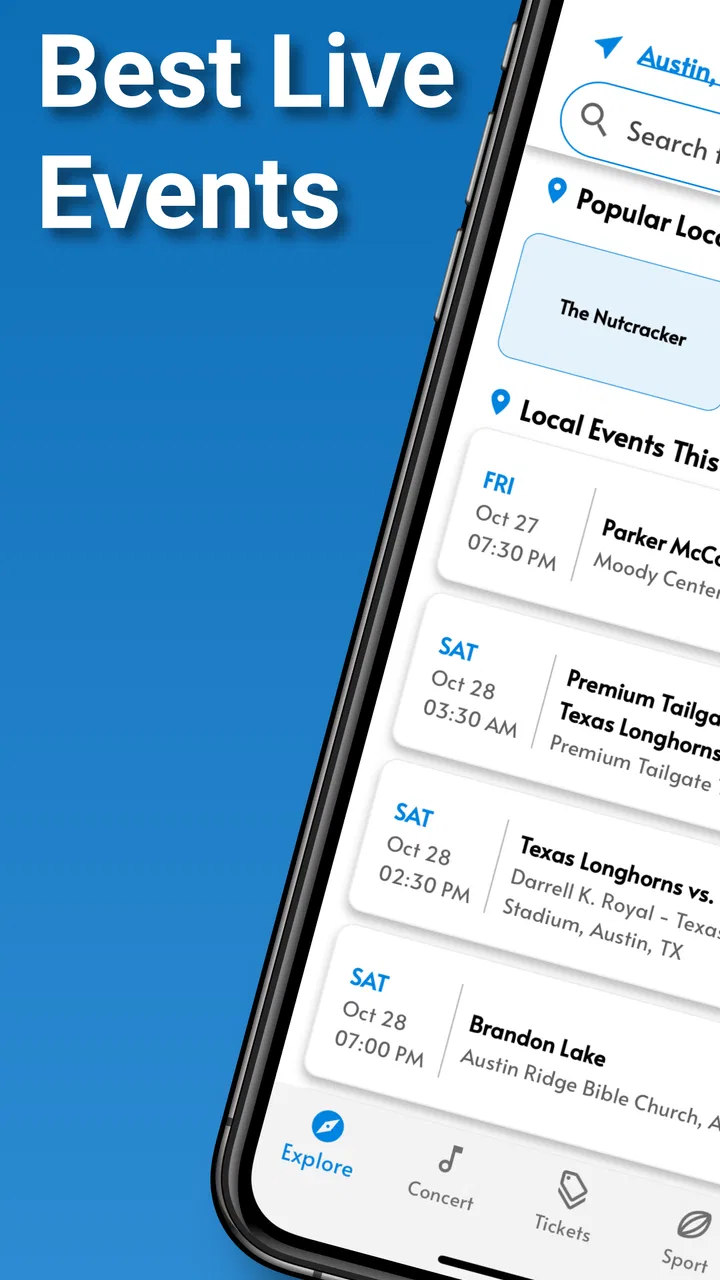
Buying a ticket on a phone can be convenient, but convenience depends on much more than finding an event and tapping a purchase button. I spent time looking at TicketSmarter as an events app with a practical question in mind: how well does it work for people using different phones, reading preferences, movement patterns, and real-life situations? My impression is mixed but useful. It is a free app from TicketSmarter Inc that can help you explore live events, yet the experience is best when you already know what you want and are prepared to double-check important details before committing.
The app is aimed at people who want a mobile route to event tickets rather than relying entirely on a desktop browser or a general search engine. That makes sense for concerts, sports, theater, and other live experiences where plans often change quickly. It is available for users aged Everyone, and the current version is 3.5.0 for devices running Android 8.0 or newer. Those requirements make it approachable for many Android users, including people who do not replace their phone every year.
How TicketSmarter feels to use in everyday situations
I find the biggest everyday benefit of TicketSmarter is having an event-focused place to begin a search when plans come together away from home. In this section, I look at how that convenience changes with the situation—especially when I have only a phone at hand—and why a quick search is most useful when I still make room to check the details before deciding.
You May Also Like

 Blood Strike: 2.5 Anniversary
Blood Strike’s Loadouts Turn Every Drop Into a Tactical Gamble
A close look at Blood Strike’s custom loadouts: how fast access to signature weapons reshapes its battle royale rhythm, rewards preparation, and narrows the gap between fights.

 Pandora - Music & Podcasts
Pandora’s Music Is Easy to Start, but Harder to Recover
Pandora’s strength is its low-effort path from a seed to a station. Its weak spot is how much confidence it asks you to place in connection, setup, and quiet recovery.

 8 Ball Pool
 Is Built on Rivalries, Rematches, and Routine
A close look at the rivalries, rematches, shared routines, and unanswered safety questions that turn a quick pool match into a persistent mobile community.

 Samsung Music
’s Quiet Strength Is Playing What You Already Own
Its reach comes less from spectacle than from dependable access to a personal library. That simplicity is both the app’s strongest retention engine and its ceiling.

 AccuWeather: Weather Radar
AccuWeather Review: A Quick, Clear Forecast for Everyday Decisions
For everyday plans, the best forecast is the one you can understand quickly. AccuWeather makes rain timing, radar, and local conditions easy to act on, with a few trade-offs.

 Hill Climb Racing
Why Hill Climb Racing Still Turns Crashes Into One More Run
A tiny car, a bumpy hill and one more upgrade: Hill Climb Racing keeps resurfacing because its simple chaos makes every near-miss feel personal.
More From Our News Desk



Readability and navigation come first
My strongest advice is to approach TicketSmarter with a specific destination in mind. If I know the performer, team, venue, or event date I am looking for, the app feels easier to judge because every screen has a clear purpose: find the event, inspect the available choices, and decide whether the listing suits my plans. If I open it without a particular idea, the experience is less focused. An event marketplace can present many possibilities, but browsing is not always as comfortable as searching with a clear goal.
That distinction matters for readability. Ticket information is not just promotional text; it can include the event name, location, date, seating information, and purchase details. I prefer to slow down at each stage instead of treating the first attractive listing as the final answer. A larger display or a phone with good contrast makes this kind of checking easier, especially when several details appear close together.
For someone who reads slowly, the best workflow is to search first and compare second. I would avoid making a decision while standing in a crowded place or while switching between several apps. Open the event, read the essential information from top to bottom, and then return to the listing if something feels unclear. This is not a criticism unique to ticket apps, but TicketSmarter rewards that deliberate approach more than hurried browsing.
The app’s average rating is 3.2 from around 120 ratings, with roughly 40 written reviews. I read that as a sign to keep expectations realistic rather than as a reason to dismiss it. A ticket marketplace can be useful while still producing occasional frustration when listings, checkout steps, or event details require more attention than expected.
Text size, contrast, and screen comfort
People who depend on large text should check how comfortably the app presents its information on their own device before planning to buy under pressure. Android’s system text settings can help in many apps, but enlarged text may change how much information fits on a screen. In a ticket-purchase flow, that can mean more scrolling and a greater need to confirm that the event details have not been overlooked.
I would also recommend using the phone’s brightness and display settings to suit the environment. At home, a moderate brightness level and a larger screen can make comparison easier. Outdoors, glare can make small details difficult to verify. If the event is important, I would complete the research somewhere calm and save the final confirmation in a way that is easy to retrieve later.
This is one of the app’s important trade-offs: mobile access is fast, but a phone screen is still a limited workspace. A desktop browser may be better for someone who wants to compare many events or inspect several seating options side by side. TicketSmarter is more appealing when portability matters more than a wide layout.
Motor and sensory considerations
Ticket purchases involve repeated taps, scrolling, backtracking, and careful selection. For users with limited hand movement or tremors, that can make a fast checkout stressful. My practical suggestion is to search and compare before the event becomes urgent. Doing the research early reduces the need for rapid gestures and gives you time to correct a mistaken selection.
Voice control, switch access, screen magnification, and other phone-level tools may help, but their usefulness depends on the device and operating-system configuration. I would not assume that every part of the app will respond perfectly to a particular assistive setup without testing it. A person who relies heavily on a specialized navigation method should try the search and event-detail stages first, before reaching the final purchase step.
Sensory comfort also varies. Ticket marketplaces can feel visually busy because they combine event imagery, labels, prices, and selection controls. Someone sensitive to crowded screens may find a direct search less tiring than scrolling through broad recommendations. Turning down sound and vibration at the phone level can make the process calmer if unexpected alerts are distracting.
A useful accessibility habit is to separate the tasks. First identify the correct event. Then verify the venue and date. Only after that should you compare ticket choices. This three-step approach reduces cognitive load and helps prevent a visually similar event from being mistaken for the intended one.
Situational access: when the app is genuinely useful
The most convincing use case is a last-minute plan that still allows a few minutes for careful checking. Imagine a friend messages me during lunch about a concert or a game. I can use the app to look up the event, compare what is available, and decide whether the outing fits my budget and schedule. The phone is already with me, so I do not need to wait until I reach a computer.
It is also useful when traveling between places. If I am away from home and want to investigate an event in another city, a dedicated events app is more direct than opening multiple search results. I can keep the process centered on the event itself rather than sorting through unrelated pages.
However, mobile convenience should not be confused with instant certainty. A person using public transport, walking, or managing a busy group should not try to complete a complicated purchase while distracted. The safer routine is to search on the move if necessary, then pause somewhere stable before confirming anything. This is especially important for users who need extra time to read or who may accidentally tap the wrong control.
TicketSmarter can also suit families or groups when one person is responsible for the initial search. I would nominate one person to check the event basics and share the relevant information with the group before buying. That avoids several people independently selecting different listings and makes it easier to discuss seating or timing.
What the free download does and does not solve
The app is free to install, which lowers the barrier to trying it. That is helpful for a user who wants to see whether the interface works comfortably with a particular phone, text setting, or assistive technology. It also means I can use the app for research without making a commitment simply to inspect the event-finding experience.
Still, free installation does not remove the need to examine the final transaction carefully. I would read every displayed charge and condition before completing a purchase, and I would keep the confirmation information accessible afterward. The app’s role is to make event discovery and ticket shopping more convenient; it should not replace ordinary care around a paid order.
This is where TicketSmarter differs from a venue’s own app or website. A venue source may be the better choice when I already know the exact location and want the most direct information from that organizer. A broad search engine may be better for discovering what is happening in a city. TicketSmarter sits between those options: it is more focused than general web search, but it may require more comparison than a single-venue service.
Remaining barriers and points of friction
The first barrier is uncertainty during comparison. Ticket listings can demand close attention, and a user who has difficulty reading dense information may need more time than the app’s mobile format naturally encourages. I would not use it as my only planning tool if I needed a highly guided, low-effort experience.
The second is the difference between finding an event and feeling fully prepared to attend it. A ticket app can help with the purchase decision, but it does not automatically answer every practical question about getting to the venue, navigating the building, managing crowds, or arranging support. Someone with mobility, sensory, or communication needs should investigate those event-specific arrangements separately rather than assuming that ticket access equals venue access.
The third barrier is device dependence. The app requires Android 8.0 or later, so anyone using an older Android phone cannot rely on it directly. For supported devices, performance and readability can still vary with screen size, display settings, and the user’s preferred accessibility tools. That makes a short trial worthwhile before an important purchase.
I also think the modest rating deserves attention. It does not tell me that every user will have trouble, but it does suggest that the experience is not universally smooth. I would keep an alternative ready, especially if the event is time-sensitive or if a group is depending on one purchase going through without delay.
Small workflows that make the experience safer
My preferred workflow begins with a written checklist: event name, city, date, and the people attending. I enter the search using those details, then compare only listings that match all four. This prevents the common mistake of finding the right artist or team but selecting the wrong city or date.
Next, I take a pause before checkout. I reread the event title and location, check the seating information, and make sure the number of tickets matches the group. This pause is particularly valuable for anyone using enlarged text or voice navigation, because it creates a deliberate confirmation point rather than relying on memory from the previous screen.
Finally, I organize the confirmation immediately. I would keep the relevant message or receipt where it can be found without searching through every notification. If another person is attending, I would share the key event details in advance. That is a simple but important accessibility improvement: the attendee does not have to depend on the purchaser’s phone at the entrance.
Another useful trade-off is choosing the larger device whenever possible. A tablet or a desktop browser may be easier for detailed comparison, while the phone is better for checking information away from home. I see TicketSmarter as strongest when used across that kind of workflow: research on the most comfortable screen, then keep the necessary information available on the phone.
Who should use it, and who may prefer something else?
I would recommend giving it a try if you regularly look for live events, prefer researching from a phone, and are comfortable checking details independently. It is especially practical for people who want one place to begin their ticket search instead of opening a general browser and sorting through unrelated results.
I would be more cautious if you need highly predictable navigation, extensive assistance during every step, or a very spacious comparison layout. In those cases, a venue’s own service or a desktop browser may be easier. The better choice depends on the task: TicketSmarter is convenient for mobile discovery, while a direct organizer channel can be preferable when accessibility information and venue-specific arrangements are the priority.
The app is also not ideal for someone who wants to browse casually without making many decisions. Its value increases when I arrive with a clear event or purpose. Without that focus, the process can feel like work because I still need to evaluate the details myself.
My inclusive verdict
TicketSmarter is a useful starting point for mobile event searches, but it works best when accessibility is treated as part of the planning process rather than an afterthought. I like the free entry point, the portability, and the ability to investigate live events without being tied to a computer. The supported Android range also makes it relevant to many existing devices, and its Everyone age rating keeps the audience broad.
At the same time, I would not describe it as a completely effortless solution for every user or situation. Reading dense ticket information, making precise selections, and preparing for the venue can still require patience and extra checking. Users with motor or sensory needs may find phone-level tools helpful, but they should test their own setup before relying on the app for an important event.
TicketSmarter has passed around 50 thousand installs, so it is not an obscure option, but its 3.2 average shows why a personal trial matters. I would install it, search for a low-pressure event, and see how comfortably I can read and navigate the important screens. If that test feels manageable, it can be a convenient part of my event-planning routine. If it feels cramped or uncertain, I would switch to a larger screen or a direct venue option rather than forcing the app to fit a need it does not serve well.
Overall, I see TicketSmarter as a practical ticket-search companion rather than a complete accessibility guide to live events. It can open the door to finding and comparing experiences, but inclusive attendance still depends on careful reading, a suitable device, and checking the arrangements that matter once the ticket is secured.
FAQs for TicketSmarter - Events Tickets
01What is TicketSmarter and how does it work?
TicketSmarter is an app designed to help users purchase tickets for various events, including concerts, sports, and theater performances. It provides a platform to search for events, compare ticket prices, and make secure purchases. Users can browse events by location or category, ensuring they find the perfect ticket for their needs.
02Are the tickets purchased on TicketSmarter legitimate and safe?
Yes, TicketSmarter guarantees the authenticity of the tickets sold on its platform. It partners with trusted vendors and uses secure payment gateways to ensure that users receive legitimate tickets. In case of any issues, their customer support team is available to assist with refunds or exchanges.
03Does TicketSmarter charge any additional fees for ticket purchases?
TicketSmarter may include service fees on top of the ticket price, which cover processing and platform maintenance costs. These fees are usually disclosed at the checkout before confirming the purchase, so users can see the total cost upfront and decide if it fits their budget.
04Can I get a refund if an event is canceled or postponed?
If an event is canceled, TicketSmarter typically provides a full refund or credit for future purchases. In the case of rescheduled events, the original tickets usually remain valid for the new date. TicketSmarter’s customer support can assist with any refund or exchange processes required.
05How can I contact TicketSmarter's customer support?
TicketSmarter offers customer support through various channels, including email, phone, and live chat. Users can visit the app's help section to find contact details and receive timely assistance with any issues related to their ticket purchases, ensuring a smooth and satisfactory experience.
Pros
- Easy-to-navigate interface
- Secure payment options
- Wide variety of events
- Instant e-ticket delivery
- Reliable customer support
Cons
- Service fees can be high
- No refunds on some events
- Limited seating options
- App occasionally crashes
- Requires account to purchase

TicketSmarter - Events Tickets
Gallery